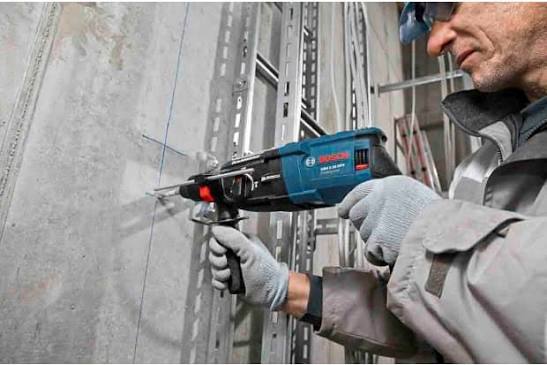
Every trade professional eventually reaches a point where a standard SDS drills simply will not do the job. Dense masonry, structural concrete, and hard stone demand a tool engineered specifically for impact-driven penetration. Before purchasing, understanding what separates adequate performance from exceptional performance in this category will protect both your budget and the quality of your work. This guide walks through the critical selection criteria so you can make a confident, informed decision.
Why Impact Drilling Requires a Specialized Tool
Standard rotary drills transmit rotational force to the bit. That approach works well for wood and soft metals, but when the material resists rotation, the drill struggles and the bit dulls quickly. A rotary hammer drill solves this by adding a pneumatic or electro-mechanical hammering mechanism that drives the bit forward in rapid, powerful pulses while it rotates.
SDS drills operate on this principle and refine it through the slotted drive system, which allows the bit to slide freely within the chuck during each hammer stroke. The result is more efficient energy transfer to the material surface, less strain on the motor, and significantly less effort required from the operator. For anyone regularly working with concrete or masonry, this engineering distinction is not a minor detail—it is the reason the tool functions effectively where others fail.
Matching the Format to the Application
When SDS-Plus Is the Right Choice
SDS-Plus format tools are the most commonly specified rotary hammers across residential and commercial construction. They handle drilling tasks from small anchor holes to medium-diameter core work in brick and standard concrete. The tool format is compact enough to manage in tight ceiling spaces and light enough for extended overhead work without placing undue stress on the operator.
Professionals in tiling, electrical installation, and general building trades find SDS-Plus tools practical for the breadth of tasks they encounter day to day. The accessory ecosystem for this format is also broad, meaning the range of compatible bits, chisels, and core bits available gives operators genuine flexibility on site.
When SDS-Max Becomes Necessary
SDS-Max format tools step in when the application involves thick, reinforced concrete, heavy chiseling, or wide-diameter drilling. The larger shank system delivers considerably more impact energy per stroke, making penetration through dense material faster and requiring less overall effort from the operator.
Structural contractors, civil engineers working on infrastructure projects, and demolition specialists are the primary users of SDS-Max equipment. The machines are heavier and generate more vibration, which means operator comfort requires attention, but for the applications these tools are designed for, no lighter alternative performs comparably.
The Role of Impact Energy in Drilling Performance
Impact energy is the single most important specification when evaluating drilling performance for heavy-duty applications. Expressed in joules, this figure quantifies the force delivered by each hammer stroke. A higher value means greater capacity to penetrate hard materials efficiently.
For lighter masonry work, a lower impact energy rating is entirely sufficient and often preferable because it provides greater control in sensitive environments. For structural drilling or work in particularly dense aggregate concrete, selecting a tool with a higher impact energy rating will reduce drilling time, minimize bit wear, and extend the working life of the machine itself.
Vibration Management and Operator Safety
Rotary hammer drills produce significant vibration during operation. Prolonged daily exposure to this vibration is a recognized occupational hazard, and the construction industry has well-established guidelines regarding safe exposure limits over the course of a working shift.
Many professional-grade rotary hammers now incorporate active vibration control systems—mechanical dampening mechanisms built into the tool body that absorb and redirect vibration before it reaches the handle. These systems make a measurable difference in comfort during sustained use and reduce the cumulative physical impact on the operator’s hands and arms over the course of a career.
When reviewing tools for purchase, active vibration control should be treated as a health and safety investment rather than a convenience feature.
Corded Tools vs. Battery-Powered Platforms
The Case for Corded Performance
Corded rotary hammer drills offer uninterrupted power delivery without the concern of battery management on long working days. For applications where the tool will run continuously through a large number of holes—laying a foundation anchor pattern, for example—a corded tool removes a logistical variable from the job.
Power output on corded tools also tends to be consistent from the first hole to the last, which matters when working to tight tolerances or when the material demands a sustained level of force to drill cleanly.
The Advantages of Going Cordless
Modern cordless rotary hammer platforms have closed the performance gap with their corded counterparts significantly. High-capacity battery systems now support sustained drilling through concrete without the sharp power decline that characterized earlier cordless designs. The practical advantage is mobility: working in locations without convenient power access, moving freely around a large site, or eliminating trip hazards from power cables are all genuine operational benefits.
For professionals who work across varied environments, a cordless SDS drill on a high-quality battery platform often provides the better overall solution—particularly when the same battery system powers other tools in the collection.
Practical Guidance for First-Time Buyers
Defining the application before selecting the tool is the most valuable step a first-time buyer can take. Identifying the hardest material to be drilled, the maximum hole diameter required, and the typical duration of daily use provides the parameters needed to evaluate specifications objectively.
Starting from these benchmarks, it becomes straightforward to determine whether SDS-Plus or SDS-Max is appropriate, whether corded or cordless suits the working environment, and which features—anti-vibration systems, variable speed, or mode selection—genuinely add value for that specific context.
The investment in a quality rotary hammer drill pays returns through reduced drilling time, longer bit life, and a tool that continues to perform consistently through years of demanding use.